Theory of Change
From vulnerability to agency: a pathway out of extreme poverty

The Climate Resilient Livelihoods Programme is built on the conviction that extreme poverty can be sustainably overcome when the most marginalised – especially women – are empowered to build livelihoods, claim their rights, and adapt to climate-related risks.
Our Theory of Change connects targeted support at household level with structural change at community and policy level. It follows a clear pathway:
1. Targeting the most vulnerable
Families living in extreme poverty are identified through inclusive, community-led methods. Special focus is placed on women-headed households, Indigenous communities, and people most exposed to climate risk.
2. Building household resilience
Tailored support is provided through productive assets, skills training, climate-adaptive practices, and Family Development Planning. Households improve income, food security, and preparedness for shocks.
3. Strengthening collective agency
Women-led self-help groups and federations foster savings, solidarity, and leadership. They serve as platforms for rights awareness, collective problem-solving, and social mobilisation.
4. Institutionalising local capacity
Community federations take on coordinating roles and engage with public service providers. Over time, they evolve into local institutions that ensure long-term sustainability and accountability.
5. Linking grassroots to policy
Local experiences feed into advocacy efforts that address structural barriers such as exclusion from safety nets, land insecurity, or gender-based violence. Dialogue with authorities helps shape more inclusive systems.
The result:
Sustainable exits from extreme poverty, enduring women-led institutions, and more inclusive, climate-resilient systems - driven by those once left behind.
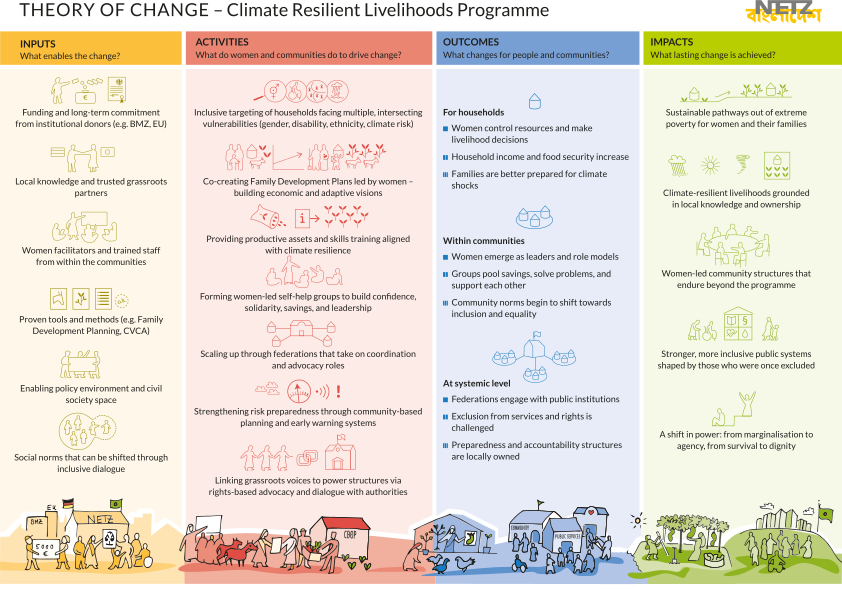
The visual below presents the complete Theory of Change, showing how inputs lead to sustainable, climate-resilient impacts for women and marginalised communities: